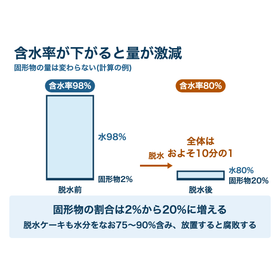
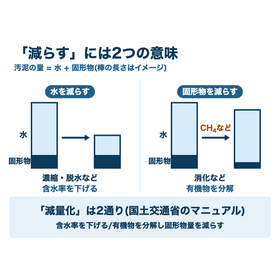
To "reduce" sludge, there are two methods: removing water and decomposing solid materials. This explains the roles of concentration, digestion, dewatering, and incineration, as well as the concept of minimizing generation.
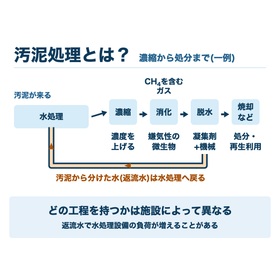
Sludge treatment refers to a series of processes aimed at reducing the amount of sludge separated from wastewater treatment, making it easier to handle, and then sending it off for disposal or recycling. In food factories, most of the sludge generated from wastewater treatment is disposed of as industrial waste after being reduced in volume through methods such as dewatering, drying, and incineration.
■ Sequence of Sludge Treatment Processes
At sewage treatment plants, sludge is processed in the following order:
1. Concentration: Increasing the concentration of solids by settling or using machinery.
2. Digestion: In an oxygen-free tank, anaerobic microorganisms break down some of the organic matter into gas.
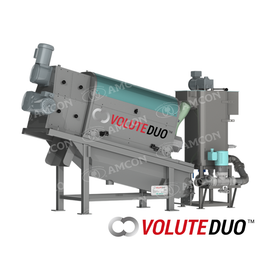
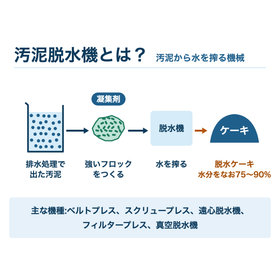
3. Dewatering: Adding coagulants and squeezing out water with machinery.
4. Drying/Incineration: Further reducing moisture and organic matter.
5. Disposal/Recycling: In addition to landfilling, it can be used for construction materials or fertilizers.
The specific processes involved may vary by facility.
■ Is the Weight of Sludge the Same?
Sludge from settling tanks is categorized based on its characteristics. Light sludge, such as organic sludge or aluminum hydroxide, has an apparent specific gravity close to that of water and a lower concentration when extracted from the settling tank. Heavy sludge, such as sand or iron oxide, tends to have a higher concentration. Please feel free to consult with us first.